
The Truth About Sinking Pavers and Why Cheap Base Prep Costs More
Homeowners often assume that laying stones in the backyard is a simple weekend job. We see the aftermath of this mindset constantly when we are called out to fix warped and uneven paver patios across the East Valley. Caldera Renovations believes in setting straight expectations about what hardscaping actually requires so you are not surprised by the process. A surface is only as strong as the dirt beneath it, and ignoring that reality leads to expensive failures.
Building a hardscape that stays perfectly flat requires heavy machinery, massive amounts of aggregate rock, and a strict adherence to local soil conditions. When someone promises you a cheap and fast patio, they are skipping the invisible steps that keep the stones from shifting. The following breakdown explains realistic outcomes, typical timelines, and the hidden facts about professional stone installations.
Topics Covered in This Guide:
- The Reality of Ground Compaction
- Typical Timelines for a Proper Build
- The Biggest Misconception About Paver Patios
- Frequently Asked Questions
- Securing a Flat Surface
The Reality of Ground Compaction
The stones you see on top of a patio are entirely dependent on the crushed rock hidden underneath them. Achieving a result that does not sink requires removing the soft native topsoil completely. We have to dig down several inches to remove organic material that will inevitably rot and collapse under pressure.
Once the bad dirt is gone, we bring in tons of coarse aggregate base material to build a new foundation. This gravel cannot just be raked flat by hand. It must be mechanically compacted using heavy vibratory plate tampers in multiple thin layers to ensure it locks together permanently.
→ From a professional standpoint: If your contractor does not show up with heavy compaction equipment, your patio is guaranteed to sink over time.
Typical Timelines for a Proper Build
A common expectation is that a new patio can be wrapped up in a single day. While the actual stones go down relatively quickly, the preparation phase takes significant time and physical labor. Proper excavation, soil disposal, and base construction take up the vast majority of the schedule.
A standard residential project usually spans several days from the initial dirt removal to the final sand sweeping. Weather conditions and hidden underground surprises like old irrigation pipes can also adjust the timeline. Planning for a multi day process ensures the crew has the time needed to perfect the grading so water flows away from your home.
→ A quick tip to remember: Rushing the excavation and base phase is the fastest way to ruin a hardscape project.
The Biggest Misconception About Paver Patios
The most common underestimation we encounter is the belief that patio stones are permanently glued to the ground. In reality, a high quality installation is meant to be a flexible system. The stones are designed to shift incredibly slightly with the natural expansion and contraction of the earth.
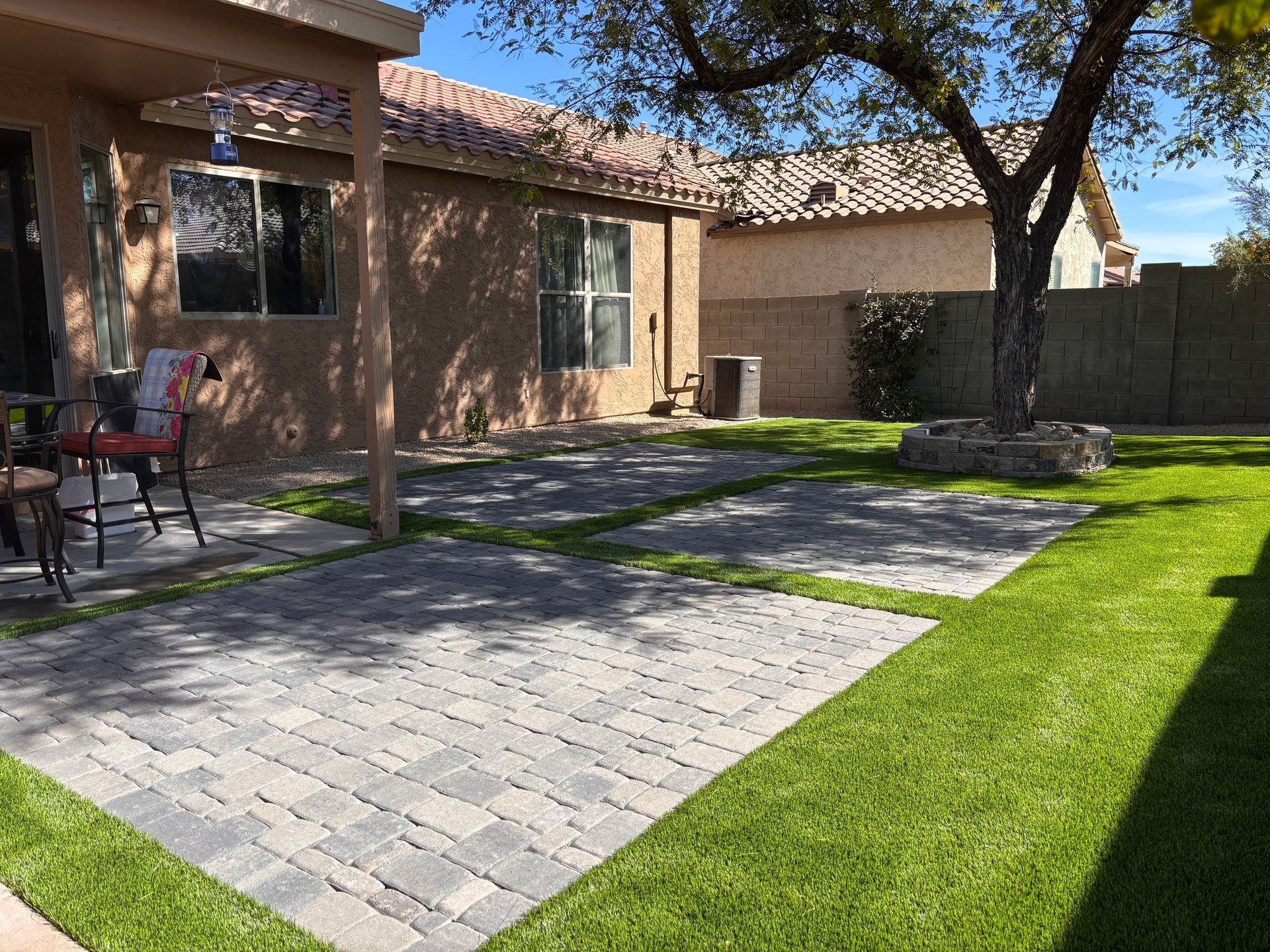
This flexibility is actually what prevents the surface from cracking like a poured concrete slab does during temperature swings. The polymeric sand swept between the joints provides a firm lock while still allowing microscopic movement. Understanding this flexible design helps you appreciate why a rigid concrete base is often the wrong choice for a desert environment, especially when bordering a flexible surface like artificial turf.
→ From a professional standpoint: A flexible aggregate base absorbs ground movement so your stones stay intact instead of snapping under pressure.
Frequently Asked Questions
Why are my patio pavers sinking?
Stones sink because the ground underneath them was not prepared correctly or has washed away. The most frequent culprit is a contractor using an inadequate amount of base rock or failing to compact the native soil before building. Poor drainage can also trap water under the surface, which softens the base and causes the heavy stones to drop.
Can a sunken paver patio be fixed?
Yes, one of the biggest advantages of this material is that the surface can be repaired without starting completely over. A professional can pull up the affected stones in the sunken area and fix the foundation underneath. After adding and compacting fresh base material, the original stones are placed right back into the pattern.
What kind of sand goes under pavers?
We lay a one inch layer of clean, coarse bedding sand directly on top of the compacted aggregate rock. This specific sand layer acts as a setting bed that allows us to level the stones perfectly. You should never use fine play sand or masonry sand, as those hold too much moisture and wash out easily.
Securing a Flat Surface
Getting honest about what it takes to build a durable hardscape helps you avoid contractors who offer low prices but skip the critical foundation work. Focusing on proper excavation and compaction ensures your outdoor space remains flat and safe for entertaining. Reach out to our local team when you want a detailed assessment of your property and a build plan that prioritizes long term stability.
Share This Blog